
Inequality Calculator
Inequality calculator is a tool that helps you solve inequalities and find the range of values that makes inequality true with Ai Math Solver.
Solve the inequality, monitor sign changes, and give the result in interval notation.
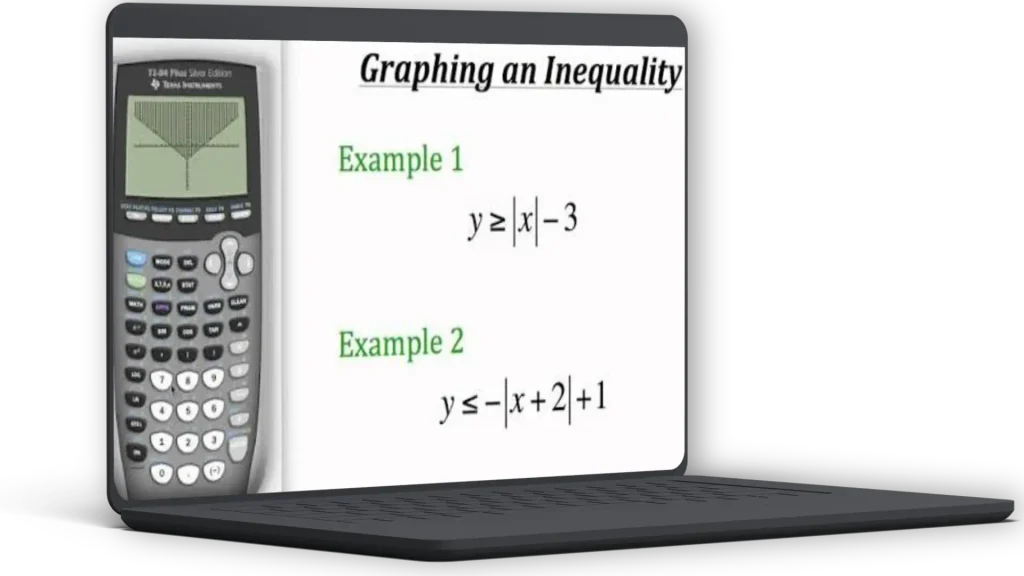
Inequalities Can Have a Range of Solutions
Rather than finding a single value, an inequality tells which makes one side value larger or smaller than the other value. The solution can be shown using number line or interval notation.
Most equation rules also apply to linear inequalities, with one key difference: multiplying or dividing by a negative reverses the inequality sign. Polynomial and rational inequalities require checking the intervals around their critical points.
How to Work With the Inequality Calculator
Enter the Expression Correctly
Simply type or paste the full expression. You can also check by uploading a photo or PDF and extracted text before solving.
Follow the Step-by-Step Solution
Each step is explained separately, allowing you to compare it with your own approach.
Get Clarification on Any Step
Stay with the current solution to explore another method, verify a restriction, or learn why a rule is used.
When the Inequality Symbol Changes Direction
An inequality sign reverses its direction when you multiply or divide both sides by a negative number. This rule is important when rearranging an inequality, because keeping the original sign can lead to an incorrect range of solutions. Always check whether a negative value was used during the calculation.
A Step-by-Step Approach to Solving Inequalities
Get the Variable by Itself
Apply opposite operations in the same way you would when solving an equation, but pay close attention if you divide or multiply by a negative number.
Determine the Boundary Values
To find the possible zeros, make each polynomial factor equal to zero. For rational expressions, set the numerator and denominator to zero separately when identifying the relevant values.
Check Each Resulting Interval
To find the possible zeros, make each polynomial factor equal to zero. For rational expressions, set the numerator and denominator to zero separately when identifying the relevant values.
Example: Solve -3x + 7 > 19
Get the variable term by itself
−3x+7−7>19−7−3x+7−7>19−7 −3x>12−3x>12
Find the value of x
−3x−3<12−3−3x−3<12−3 x<−4x<−4
Final Result:
x<−4x<−4